


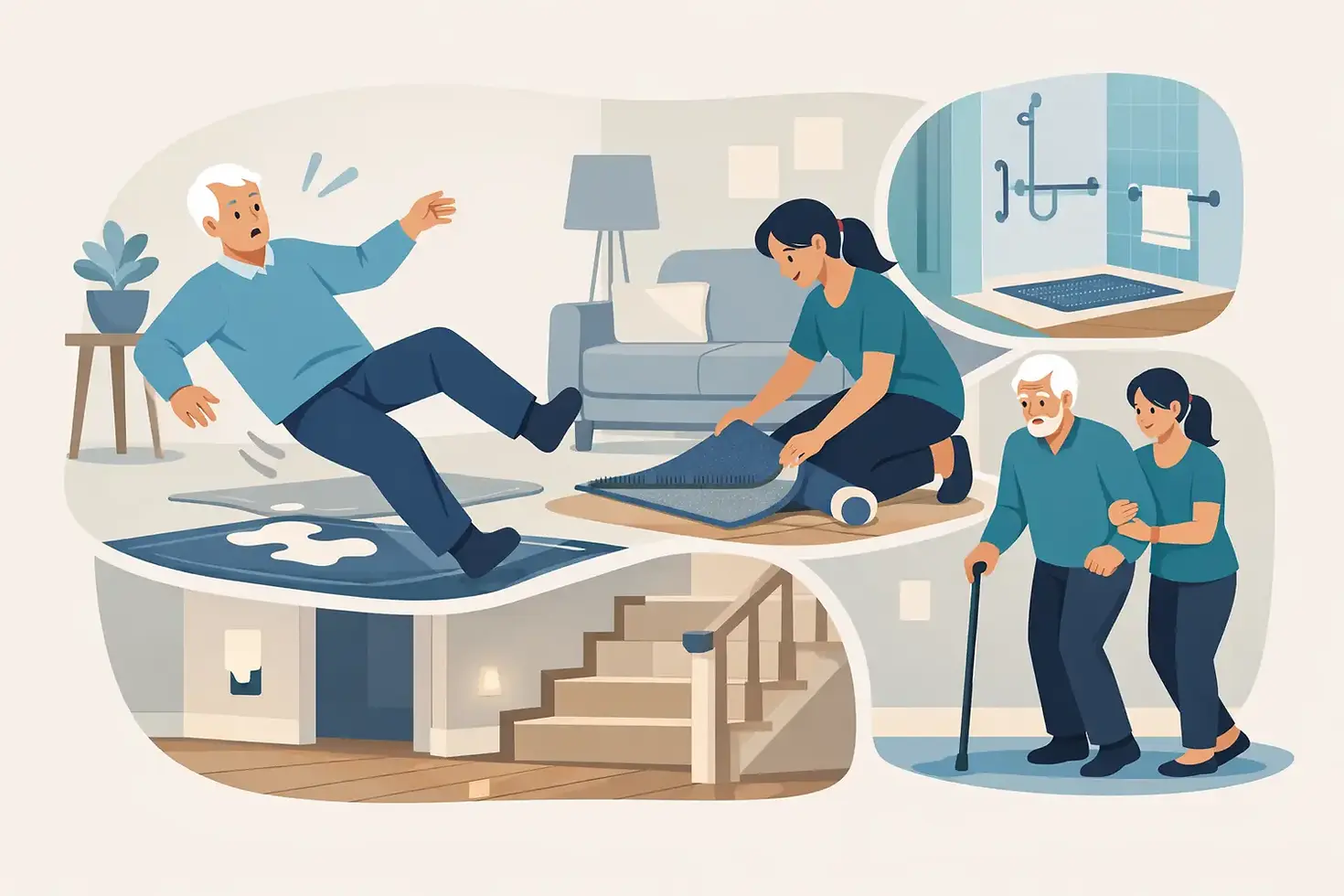
How to Prevent Falls Indoors at Home
A fall at home often happens during an ordinary moment - getting up too quickly from an armchair, walking to the bathroom at night, or reaching for something in a kitchen cupboard. That is why knowing how to prevent falls indoors matters so much. For older adults, a fall can affect confidence as much as physical health, making everyday life feel smaller and less secure.
The good news is that most indoor falls do not come down to one single cause. They tend to happen when several small issues build up: poor lighting, uneven flooring, reduced balance, side effects from medication, or simple fatigue. When those risks are noticed early, home can stay both familiar and safe.
Why indoor falls happen more often than families expect
Many people picture falls as dramatic accidents, but more often they happen during routine tasks. A loose rug, a cluttered hallway or slippers without enough grip can be enough to cause a stumble. If someone is already living with arthritis, poor eyesight, dizziness or memory problems, the risk rises further.
There is also an emotional side to this. Some older people minimise near misses because they do not want to worry family members or feel that their independence is being questioned. That is understandable, but near falls are useful warning signs. They give families a chance to make thoughtful changes before a serious injury happens.
How to prevent falls indoors room by room
The safest home is rarely the one with the most equipment. It is the one arranged around the person who lives there. That means looking closely at daily routines and the places where someone feels rushed, unsteady or tired.
Hallways and stairs
These areas should be kept as clear as possible. Shoes, bags, small tables and trailing wires can quickly become hazards, particularly if someone uses a walking aid. Good lighting matters here, especially near doorways, on landings and at the top and bottom of stairs.
Handrails on both sides of a staircase can offer more reassurance than one alone. If stairs are becoming more difficult, it may help to review whether the person can reduce trips up and down by keeping essential items on one floor for part of the day.
Living room
A living room should support safe movement, not force someone to weave around furniture. Chairs and sofas need to be easy to get in and out of, with arms that provide support when standing. Very low seating may feel comfortable at first but can make rising difficult and increase the chance of losing balance.
Rugs deserve special attention. If they slip, curl at the edges or bunch up, they are a common cause of falls. In some homes, removing them is the safest choice. In others, securing them properly may be enough. It depends on the person’s mobility, eyesight and confidence on their feet.
Bedroom
Many falls happen when getting in or out of bed, especially during the night. A bedside lamp within easy reach can help, as can a clear path between the bed and the door. If someone regularly gets up to use the toilet, motion-sensor lighting can make a real difference without being intrusive.
The height of the bed matters too. If it is too low or too high, standing up can become awkward. Clothing and footwear left on the floor should be put away promptly, as they can easily be missed in dim light.
Bathroom
Bathrooms combine hard surfaces, water and rushed movement, so they are one of the highest-risk rooms in the house. Grab rails by the toilet and in the shower or bath can improve safety, but only if they are fitted in the right places for the individual using them.
Non-slip mats and flooring help, though they should lie flat and stay secure. For some people, a shower chair or raised toilet seat can reduce strain and improve stability. These aids work best when chosen with the person’s actual needs in mind rather than as a general precaution.
Kitchen
The kitchen often involves reaching, bending and carrying, all of which can challenge balance. Frequently used items should be stored at waist height where possible, so there is less need to stretch upwards or crouch down. Spills should be cleaned up straight away, even small ones.
If standing for long periods is tiring, it may help to prepare food in stages or use a perching stool. That kind of adjustment can preserve energy and reduce the chance of becoming unsteady near hard floors and sharp corners.
Health factors that increase the risk of falls indoors
Knowing how to prevent falls indoors is not only about the home itself. A person’s health can change how safe that environment feels from one month to the next.
Poor vision is a major factor. If eyesight has changed, even familiar surroundings can become harder to judge. Regular eye tests and the right glasses can make a practical difference. Hearing matters too, particularly for overall awareness and balance.
Medication is another important area. Some medicines can cause dizziness, drowsiness or a drop in blood pressure when standing up. That does not mean medication should be stopped, but it does mean a review may be sensible if someone has become more unsteady.
Weak muscles and reduced balance often develop gradually, so families may not notice until a fall happens. Gentle movement, guided exercises and physiotherapy can all help maintain strength. The right approach depends on the person’s mobility, confidence and any existing medical conditions.
Continence issues can also play a part. If someone rushes to the toilet, especially overnight, they are more likely to fall. In those cases, the answer is not only better lighting or grab rails. It may also involve reviewing routines, fluids, medication timing or support during certain parts of the day.
Footwear, clothing and everyday habits
Small daily habits often make a bigger difference than people expect. Slippers should fit properly and have a good grip. Backless styles may be easy to slip on, but they are not always steady underfoot. Shoes worn indoors should support the whole foot rather than slide about.
Clothing should allow easy movement and not trail on the floor. Long dressing gowns, loose hems and poorly fitted trousers can catch on furniture or underfoot. Walking aids also need checking regularly. A stick at the wrong height or a worn ferrule can make someone less stable rather than more secure.
Rushing is another overlooked risk. People are more likely to lose balance when they stand up quickly, hurry to answer the telephone or carry too many things at once. Encouraging slower, steadier movement is not about taking independence away. It is about making daily life feel more manageable and less hazardous.
When extra support can help prevent falls indoors
There comes a point in some households where good intentions are not quite enough. A family may have cleared the clutter, improved the lighting and bought safer footwear, yet still worry because their relative is frail, forgetful or recovering from illness. That is often when personalised support becomes valuable.
A carer can help with practical tasks that reduce fall risk, such as assisting with washing and dressing, preparing meals, noticing changes in mobility, and making sure commonly used items are within easy reach. Just as importantly, regular support can build routine and confidence. People tend to move more safely when they do not feel rushed, tired or overwhelmed.
For those living with dementia, indoor falls can be linked to confusion, misjudging spaces or forgetting to use mobility aids. In that situation, prevention needs to be gentle and person-centred. Familiar routines, calm prompts and a well-organised environment often help more than making the home feel clinical.
In areas such as Chichester, Selsey and the Wittering community, many families want practical help that keeps a loved one safe without taking away the comfort of home. That balance matters. Support should protect dignity as well as physical wellbeing.
Signs it may be time to review safety at home
A serious fall is not the only signal to act. Repeated stumbles, bruises with no clear explanation, holding onto furniture while walking, or avoiding stairs can all point to a change in risk. So can increased tiredness, slower movement or anxiety about being alone.
If a person has recently come out of hospital, started a new medication, or become less confident after an illness, it is worth looking again at the home setup. Falls prevention is not a one-off task. It needs reviewing as health, routines and abilities change.
Sometimes the most helpful step is simply starting the conversation kindly. Many older adults worry that admitting difficulty will lead to pressure to leave their home. In reality, early support often does the opposite. It can make staying at home safer, more comfortable and more sustainable.
A safer home does not need to feel restrictive. With the right adjustments and the right support, it can still be a place of ease, familiarity and independence - which is exactly what most people want from later life.


Comments