


Home Care vs Residential Care: What Fits Best?
A move into care is rarely just a practical decision. For many older people and their families, it is tied up with home, identity, routine, and the worry of getting it wrong. When comparing home care vs residential care, the real question is often this: what will help someone stay safe, well, and respected while still living the kind of life that feels like their own?
There is no one-size-fits-all answer. The right choice depends on health needs, the home environment, family support, and personal preference. What matters most is understanding how each option works in daily life, not just on paper.
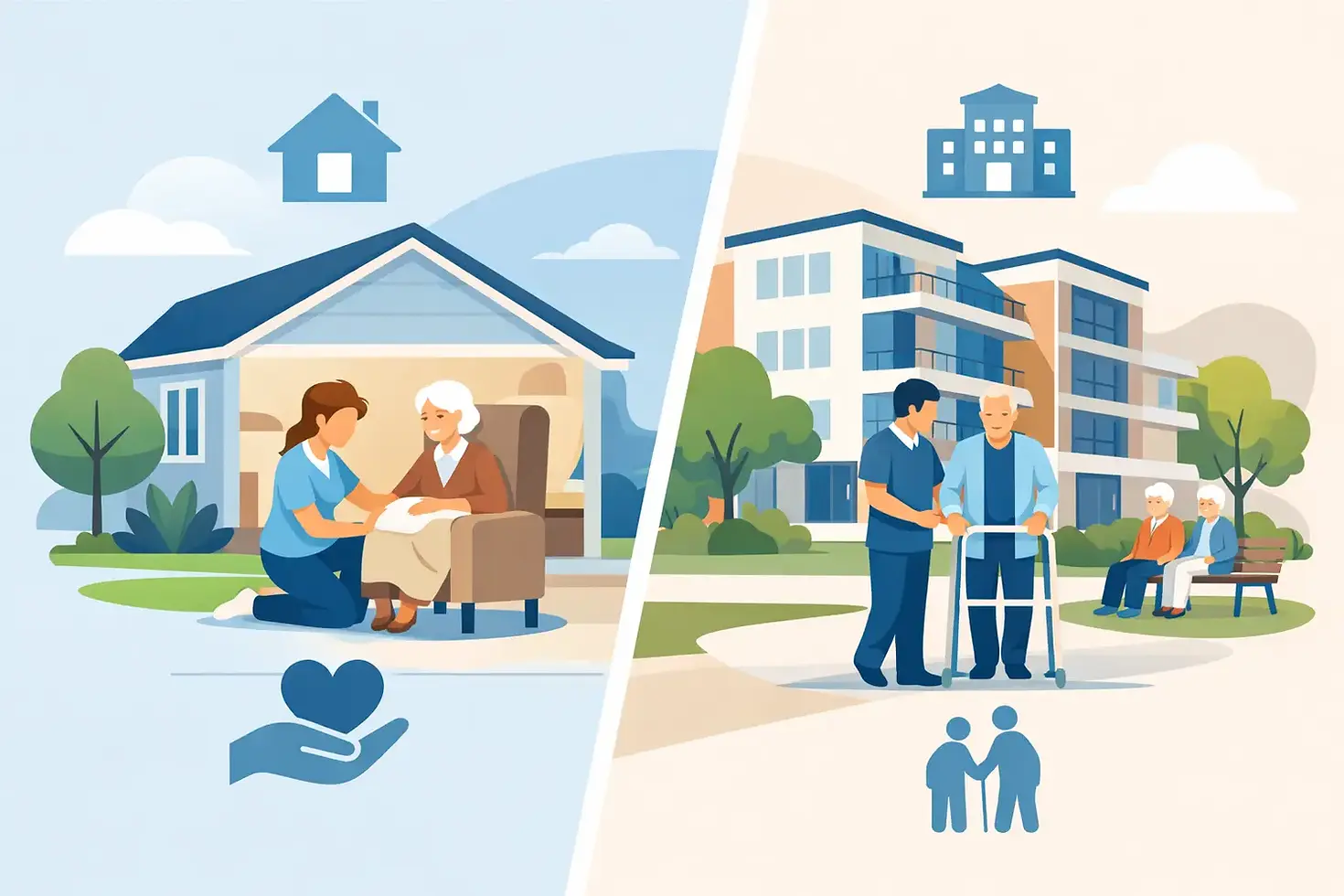
Home care vs residential care - the key difference
Home care means support is provided in the person’s own home. A care professional visits at agreed times to help with daily tasks such as washing, dressing, meal preparation, medication support, mobility, companionship, and routines that keep life manageable and safe. Care can start with a little help each week and increase as needs change.
Residential care means moving into a care home, where accommodation and care are provided in the same setting. Staff are on site, and support is built into everyday life. For some people, this offers reassurance and a more structured environment.
The biggest difference is simple. Home care supports a person in staying where life already feels familiar. Residential care involves leaving home and adapting to a shared setting with its own timetable, staff team, and routines.
Why home matters so much
For many older adults, home is not just a building. It is where they know the light switches, where the kettle lives, which chair is comfortable, and what the garden looks like in the morning. Familiar surroundings can reduce stress and help people feel more in control, especially if they are living with dementia, reduced confidence, or mobility issues.
That sense of familiarity often has a real effect on wellbeing. People may eat better in their own kitchen, sleep better in their own bed, and feel more settled when they can keep to their own habits. Small details matter - choosing when to get up, what to wear, what to have for lunch, or whether to listen to the radio after tea.
This is one reason home care can be such a positive option. It helps preserve ordinary life. That may sound modest, but in later life, ordinary routines are often what protect dignity and independence.
When home care may be the better fit
Home care is often well suited to people who want to remain independent but need support to do so safely. That might mean help with personal care in the morning, medication prompts during the day, meal preparation, or regular companionship to reduce isolation.
It can work particularly well when the person is settled at home and the property can be made safe with the right adjustments. Handrails, better lighting, mobility equipment, and clear routines can all make a significant difference. If family members live nearby, home care can also complement informal support without placing the full burden on relatives.
Another strength is flexibility. Care can be shaped around the individual rather than the individual fitting around the service. Some people need short visits once or twice a day. Others need longer calls, specialist dementia support, or a more involved care plan because of frailty or disability. The support can evolve as circumstances change.
This person-centred approach is often what families are looking for when they are trying to avoid an unnecessary move into care. A good domiciliary care service should not simply complete tasks. It should support confidence, protect routines, and notice changes in wellbeing before small problems become bigger ones.
When residential care may be more suitable
Residential care may be the right option when someone’s needs have become too complex or intensive to manage safely at home, even with support. This can happen if a person needs round-the-clock supervision, has advanced dementia with significant risk, or requires regular support that cannot realistically be delivered through care visits alone.
It may also be more appropriate if the home environment is no longer safe and cannot be adapted, or if the person is extremely isolated and would benefit from a communal setting with staff available throughout the day and night.
For some families, residential care brings peace of mind because support is always on hand. That matters, especially when needs are high and relatives are exhausted or worried about emergencies. Choosing residential care does not mean anyone has failed. In some situations, it is the safest and kindest option.
Looking at safety in real terms
Safety is one of the biggest concerns in any care decision, but it should be looked at carefully rather than assumed. Moving into a care home is not automatically safer in every case, just as staying at home is not automatically risky.
A person may be very safe at home if they have the right care, equipment, medication support, and regular monitoring. On the other hand, someone who is frequently falling, wandering, forgetting to eat, or struggling overnight may need a higher level of supervision than home care can provide.
The useful question is not, "Which sounds safer?" It is, "What are the actual risks here, and how can they be managed best?" That calls for an honest assessment of mobility, cognition, continence, medication, nutrition, and the person’s ability to manage between visits.
Cost matters, but value matters too
Families often compare home care and residential care in terms of price, and that is understandable. Care decisions have financial consequences. But cost should be weighed alongside quality of life, not separately from it.
Home care can sometimes be more cost-effective, especially when a person needs support at certain times of day rather than full-time accommodation. It allows people to continue using their own home, keep their possessions around them, and maintain community ties.
Residential care includes accommodation, staffing, and day-to-day support, which may make sense when needs are high and frequent. However, if someone is still able to enjoy a good level of independence at home with tailored support, paying for a move into residential care too early may mean giving up more than is necessary.
The better question is not simply, "What is cheaper?" It is, "What level of care is genuinely needed now, and what option gives the best balance of safety, dignity, and daily wellbeing?"
Home care vs residential care for dementia support
When dementia is part of the picture, the decision can feel even more emotional. Familiar surroundings often help people with dementia feel calmer and less disorientated. Remaining at home can reduce the distress that sometimes comes with a major change of environment.
Home care can support routines that are already known and comforting. The person may respond better when care is delivered in a place they recognise, with favourite objects, familiar sounds, and established habits around meals, bathing, and rest.
That said, dementia can progress to a stage where residential care becomes necessary. If confusion is severe, risks are increasing, or the person needs very frequent supervision, a specialist setting may provide the consistency and oversight that home care cannot fully match.
This is very much an "it depends" situation. Early and moderate dementia does not automatically mean a move into residential care. Many people live well at home for a long time with the right support.
The emotional impact of each option
Care decisions are often discussed in practical language, but emotions sit underneath almost every conversation. Older adults may fear losing control, becoming a burden, or being uprooted. Families may feel guilt, uncertainty, or tension if relatives disagree about what should happen next.
Home care can feel gentler because it adds support without immediately removing familiar life. It often gives families time to respond to change gradually rather than making one large, irreversible decision under pressure.
Residential care can also bring relief, particularly if home life has become exhausting, unsafe, or lonely. But adjustment can take time. Moving away from home, neighbours, pets, and possessions is not a small thing. It deserves careful thought and honest discussion.
How to decide with confidence
The best decisions are usually made before a crisis. If possible, talk early about preferences, concerns, and what matters most to the person receiving care. Some people value privacy above all else. Others prioritise having people around them. Some want to stay at home for as long as possible, while others would feel reassured by a residential setting if needs increase.
It helps to look at daily life in detail. Can the person manage safely between visits? Are they eating and drinking well? Is personal care becoming difficult? Are there signs of confusion, falls, missed medication, or carer strain? These practical questions often reveal which option is realistic now.
For many families in Chichester and across West Sussex, the answer begins with home care because it offers support without taking away the familiarity of home. Providers such as Avoston focus on personalised care that adapts to the individual, helping older adults stay safe, comfortable, and as independent as possible in the place they know best.
If you are weighing up home care vs residential care, try not to think only in terms of services. Think about the life behind the service. The right care should not just meet needs. It should protect the person, their routines, their choices, and the feeling that life is still their own.


Comments